+86 18892628482
  sales@china-xj.com
The core of ring network power supply is multi-branch distribution. Several feeder branches are drawn from the 35 kV busbar of the main substation, and each branch can supply about three traction step-down substations. Two branches from different substations are interconnected through sectionalizing switches, so that when one main substation is out of service, the other can provide backup power.
 |
 |
 |
So, what is a Ring Main Unit (RMU)? And why is ring network power supply commonly used for residential high-voltage distribution? The following is a brief explanation.
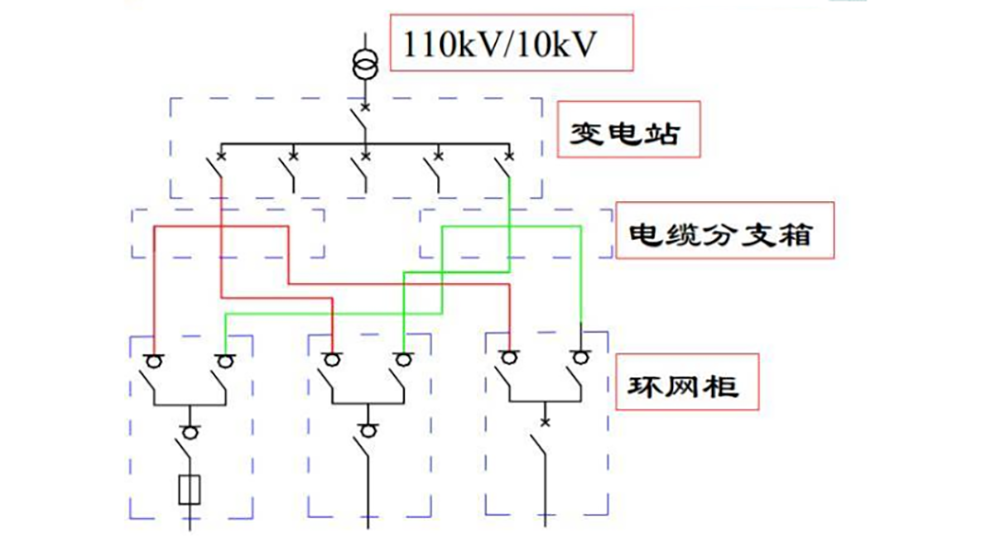
(1) What is ring network power supply?
To improve power supply reliability and allow users to receive power from two directions, the distribution network is usually connected in a ring configuration.
This power supply mode is referred to as ring network power supply.
(2) What is an RMU, and why is ring network power supply suitable for residential areas?
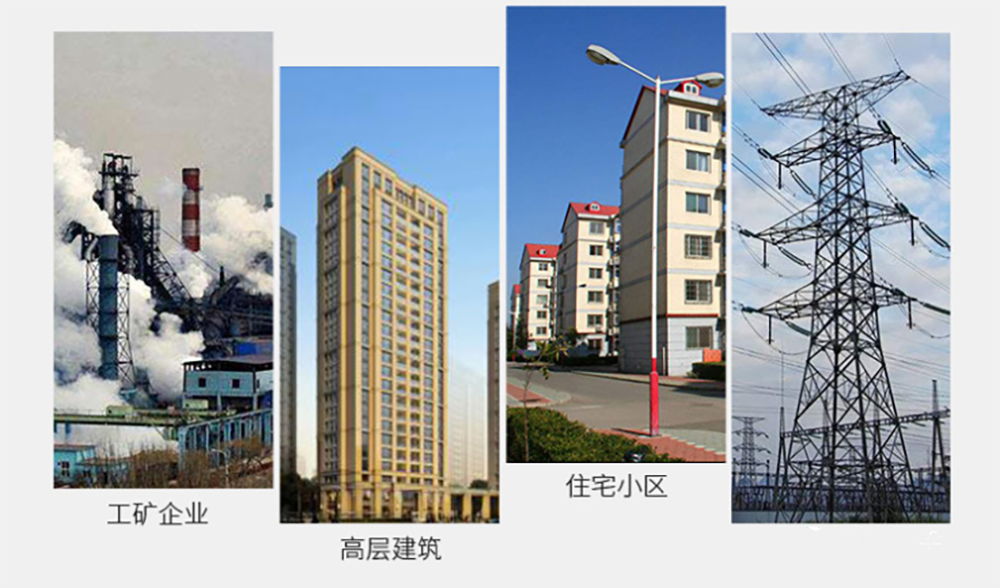
In 10 kV AC distribution systems for industrial enterprises, residential communities, ports, and high-rise buildings, the load capacity is generally not large. Therefore, high-voltage circuits are usually controlled by load switches or vacuum circuit breakers and protected by high-voltage fuses. These systems commonly adopt ring network power supply, and the high-voltage switchgear used is generally referred to as a Ring Main Unit (RMU).
In addition to supplying power to the local distribution station, the high-voltage busbar of the RMU also carries the through current of the ring network (i.e. the current supplying adjacent distribution stations via the busbar). Therefore, the cross-sectional area of the high-voltage busbar must be selected based on the sum of the local load current and the ring network through current, to ensure that the busbar does not operate under overload conditions.
(3) Where are RMUs commonly used?
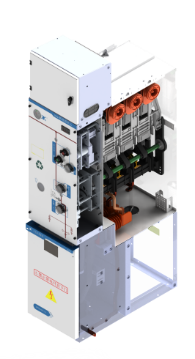
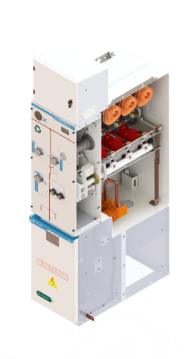
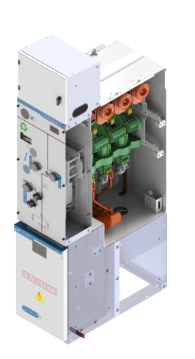
An RMU is a set of high-voltage switching devices installed in a metal-enclosed cabinet or assembled as modular ring network units. Its core components are load switches and fuses. It features simple structure, compact size, low cost, improved power supply performance, and enhanced operational safety.
RMUs are widely used in urban residential areas, high-rise buildings, large public buildings, industrial facilities, load centers, and package substations. At present, there are many RMU models available, such as HK-10, MKH-10, 8DH-10, XGN-15, and the SM6 series.
(4) Structure of an RMU
RMUs are generally classified into air-insulated and SF₆-insulated types. They are used for switching load current, interrupting short-circuit current and transformer no-load current, as well as controlling and protecting charging currents of overhead lines and cable lines over a certain distance. RMUs are key switching devices for ring network and terminal power supply systems.
In air-insulated RMUs, common load switch types include gas-generating, compressed-gas, and vacuum types. In SF₆-insulated RMUs, SF₆ load switches are used. Since the SF₆ gas is sealed inside the enclosure, the isolating gap is not visible.
Load switches in RMUs are generally required to have three positions: load switching, circuit isolation, and reliable earthing.
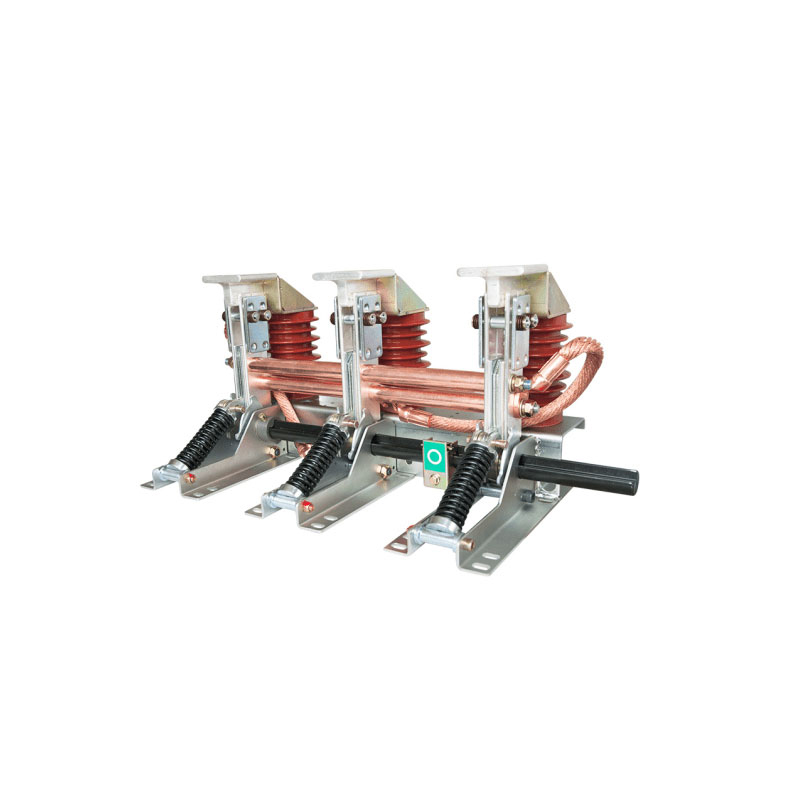
Gas-generating, compressed-gas, and SF₆ load switches can easily achieve three-position operation. However, vacuum interrupters can only interrupt current and cannot provide isolation. Therefore, vacuum load switch RMUs usually require an additional isolating switch installed upstream of the load switch to form a visible isolation gap.
2026-01-05